Managing voltage changes in your property
If you’re experiencing voltage fluctuations or EV charger issues, we're here to help
Understanding and managing voltage issues
We are dedicated to providing you with a reliable electricity supply. Sometimes, you might experience voltage fluctuations, which can cause the following:-
Lights that are very dim, very bright, or flickering
Problems charging your electric vehicle (EV) or issues with your solar panels
Electric heating, kettles, or cooking appliances taking longer to heat up and or making strange noises
Common signs of voltage problems
| Symptom | Possible Cause |
| Flickering lights | Network instability or loose connections |
| Dim or overly bright lighting | Voltage outside normal range |
| EV charger errors | Voltage drop or surge |
| Appliances making odd noises | Voltage irregularities |
| Solar inverter faults | Grid voltage mismatch |
In the UK, the standard voltage for single-phase electricity is 230 volts, with an allowable range of 216.2 to 253 volts (-6% to +10%). Most electrical equipment should work fine within this range.
Our engineers and support teams work constantly to keep the voltage within this range. However, short-term fluctuations can occur, especially during network maintenance or sudden changes in electricity usage.
Why voltage fluctuations happen
Electricity voltage fluctuations can occur for several reasons, here are some common causes.
Sudden changes in electricity usage:
Large appliances or machinery starting up or shutting down can cause sudden changes in demand, leading to voltage fluctuations.
Faults in the network:
Issues such as damaged cables, faulty transformers and substations, or other equipment failures can disrupt the normal voltage levels.
Transformer magnetising inrush current:
When transformers are energised, they can draw a large inrush current, causing a temporary drop in voltage.
Customer equipment:
Certain types of equipment, like motors and welders, can cause voltage fluctuations due to their high power consumption.
Weather conditions:
Extreme weather, such as storms or high winds, can damage power lines and equipment, leading to voltage instability.
Maintenance and upgrades:
Planned maintenance or upgrades to the network can temporarily affect voltage levels.
Fault brewing:
"Fault brewing" in electricity refers to an abnormal electrical current flow, essentially a "fault" within an electrical circuit, usually caused by a short circuit where a live wire touches a neutral or ground wire, leading to a sudden, high current surge that can damage equipment if not quickly mitigated by safety devices like circuit breakers or fuses.
EV charger voltage issues
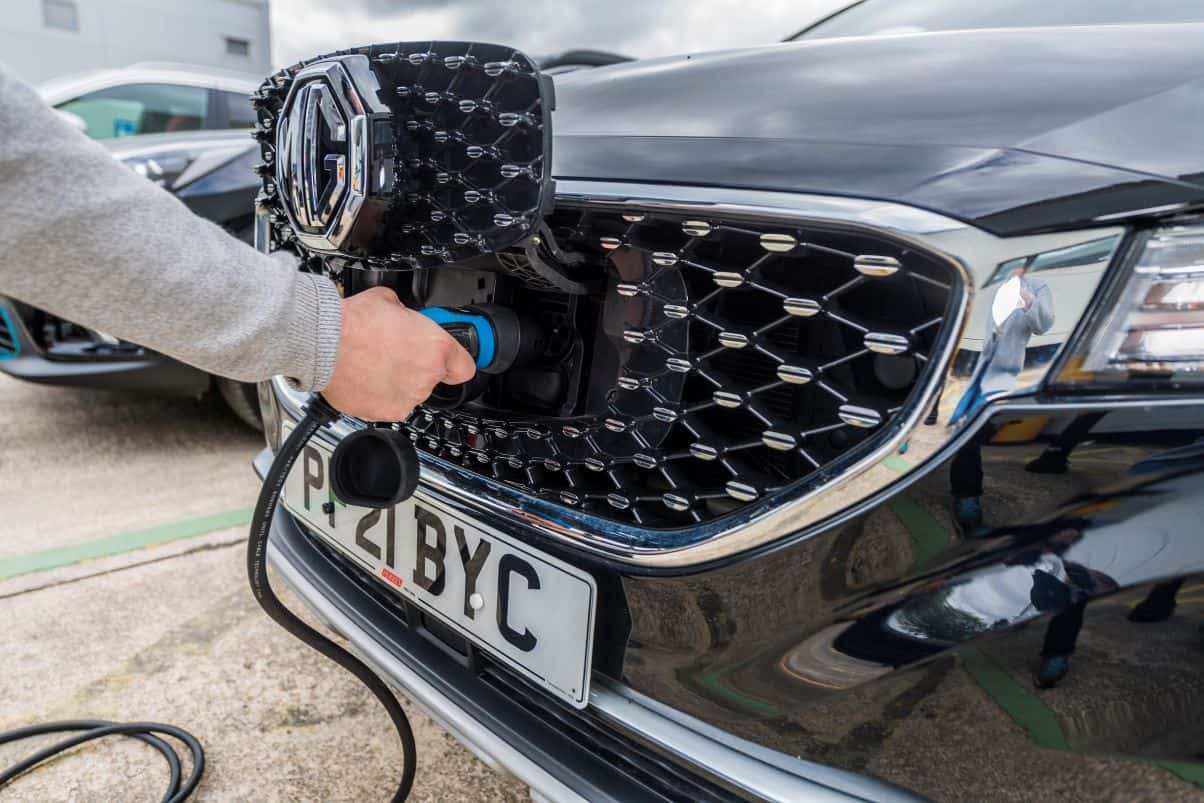
Your EV charger operates within a specific voltage range. If the voltage goes outside this range, the charger will stop working and show an error. This safety feature protects your charger and vehicle. If this happens, try switching the charger off and on at the isolator switch. If the problem persists, contact your installer or electrician to check your equipment.
What you can do at Home or Work:
- Check your appliances: If only one appliance is affected, it may be faulty. Try plugging it into a different socket or testing another device in the same outlet.
- Use surge protection: Install surge protectors to safeguard sensitive electronics like computers, TVs, and routers.
- Avoid overloading circuits: Spread high-power appliances across different sockets to reduce strain on individual circuits.
- Log the issue: Keep a record of when voltage issues occur, including time, duration, and affected devices. This helps engineers diagnose the problem faster.
Commercial customer guidance:
- Power quality audits: Businesses can request a detailed power quality assessment to identify voltage-related risks
- Sensitive equipment: If you operate medical, industrial, or IT equipment, consider installing voltage regulators or UPS systems
- Coordination with your electrician: We recommend working with a qualified electrician who can liaise with our engineers during investigations
Preventive measures for future stability
- Smart meters: These can help detect unusual usage patterns and voltage anomalies
- Regular maintenance: Ensure your internal wiring and fuse board are inspected periodically
- Report early: The sooner you report an issue, the quicker we can resolve it and prevent damage
How we can help
If you have ongoing voltage issues, please report them by providing as much information as possible, including the property addresses affected, any time-of-day patterns, how regular the issues occur and what appliances are affected. We will check for any known problems in your area.
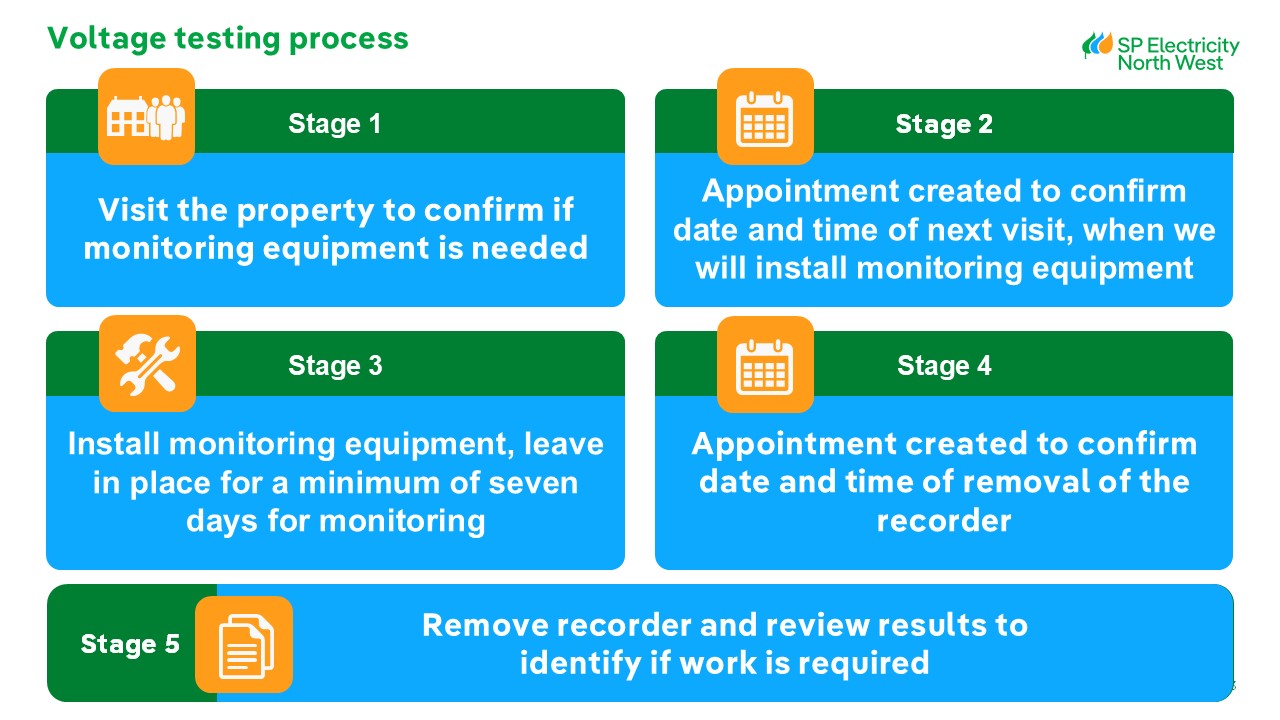
If there are no known issues, we will send an engineer to investigate and check our equipment. We might find the problem immediately, or we may need to install a recording device to monitor your supply voltage for seven days. After analysing the results, we will inform you of our findings and any further actions needed. Please see our voltage testing process below.
Report a voltage issue
Call 0800 195 4141, email ElectricityNorthWestEnquiries@enwl.co.uk or reporting online by completing the enquiry form.
⚠ Electricity is dangerous and can cause serious injuries or even death ⚠
⚠ Stay Away, Stay Alive! ⚠
If you notice any sparks, burning smells, or other signs of electrical hazards, evacuate the area immediately and call emergency services.
In case of an emergency:-
- Call 999 if there is a serious immediate risk or if someone requires medical help 24 hours a day
- Call 105 to report the emergency 24 hours a day or for non-emergencies call 0800 195 4141