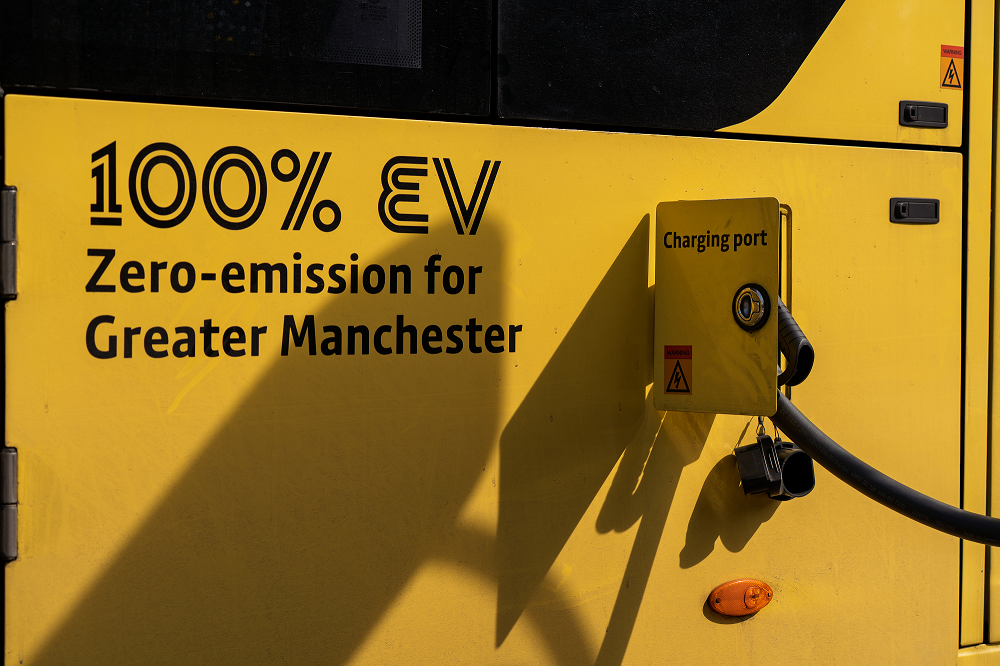
SP ENW’s role in Greater Manchester’s Bee Network
We're proud to play a vital and continuing role in enabling the roll out of the electrification of Greater Manchester’s 300-strong electric bus fleet, with a further 700 planned by 2030.
The rollout of hundreds more zero-emission buses will inevitably bring a surge in electricity demand, and we're committed to keeping Greater Manchester moving.
Bus reform has been a flagship priority for Greater Manchester and formed the foundation for Greater Manchester’s Bee Network, which is a fully integrated, zero-emission, public transport system designed to be fully accessible and affordable.
We play a vital and continuing role in enabling this roll-out, which started in September 2023.
With plans in place to expand this to 1,000 zero-emission buses by 2030, and transport accounting for around one-third of Greater Manchester’s carbon emissions, buses present a key opportunity to decarbonise. Electrifying the fleet not only reduces emissions but also improves regional connectivity and demonstrates the wider societal goal of unlocking inclusive growth across the region, ensuring no one is left behind and can use a reliable public transport system, that’s within everyone’s means.
The ambition to replace the entire bus fleet with electric vehicles by 2030 is central to Greater Manchester’s 2040 Transport Strategy and its 2038 carbon neutrality target.
The plans will inevitably bring a surge in electricity demand, and this requires significant infrastructure investment and coordination between SP ENW, Transport for Greater Manchester (TfGM) and stakeholders across the region.
TfGM forecast that electricity demand across the network will rise from 58,000 MWh in 2024 to approximately 214,000 MWh by 2036.
SP ENW’s support has and will continue to include strategic spatial planning to identify optimal locations for new depots and charging infrastructure, alongside early engagement on connections to streamline applications. This has enabled TfGM to explore flexible connection options and off-peak charging strategies, reducing costs and accelerating connection times to get Greater Manchester residents moving around the city-region efficiently and sustainably.